

Reading the Land Before You Build a Shelter with Natural Materials
From my experience in the outdoor environment, I have learned that real protection from the elements begins long before you even set foot on the ground to build a shelter using natural materials. On a hiking trip, an overnight camping adventure, or even a spontaneous excursion into the wilderness, being attuned to your surroundings is one of the most critical survival skills you can develop. This skill is invaluable because it requires no special equipment—nature itself provides the resources you need if you take the time to observe carefully and interpret your environment. On raw and rugged land, such as the vast open spaces of Utah, weather conditions can shift abruptly, from scorching sun to sudden storms, making the ability to read the climate, terrain, and natural signs essential for survival. By noticing subtle cues in the landscape, like the direction of the wind, the presence of natural windbreaks, or areas that naturally retain warmth, you can make informed decisions about where to find shade during the heat of the day, how to layer your clothing for warmth at night, and which areas offer protection from sudden rain or wind. Developing this level of environmental awareness not only enhances your personal safety and reduces the risks of exposure but also allows you to confidently build a shelter from natural materials when needed. Over time, this practice cultivates a deeper connection with the natural world, allowing you to move through it with respect, awareness, and preparedness, knowing that with the right mindset and observation, you can thrive even in the most challenging outdoor conditions.
Building a Shelter with Natural Materials Using What’s Around You
While practicing survival skills in the wilderness, I have learned to rely almost entirely on the resources available in my immediate surroundings—rocks, wood, leaves, and brush—to create warmth, dryness, and lasting protection. These natural materials are far more versatile than they first appear, and understanding how to use them effectively can make the difference between comfort and danger when weather conditions suddenly shift. For instance, stacking rocks to form a low wall can block cold winds, while layering branches and brush on the ground provides insulation from moisture and cold seeping up from the earth. Wood and dry foliage can be arranged not only to build a shelter using natural materials but also to trap heat efficiently, creating a micro-environment that supports both survival and mental resilience.
A well-constructed shelter goes beyond mere physical protection—it serves as a safeguard against hypothermia, dehydration, and exhaustion, allowing a survivalist to conserve energy and maintain focus. Every decision, from the angle of the walls to the thickness of the roof, the placement of the entrance, and even the selection of natural padding on the floor, directly impacts how well the shelter performs under real conditions. Learning to adapt to the land rather than trying to impose artificial designs fosters a mindset that values simplicity, efficiency, and respect for the natural environment. Over time, this approach reinforces a self-reliant, observant, and strategic mindset, teaching that in many real-world survival scenarios, simple, well-thought-out designs made from natural materials can often outperform even the most sophisticated modern tools. Ultimately, the process of building a shelter from natural materials in the wild becomes both a practical survival skill and a lesson in patience, ingenuity, and harmony with the natural world.
How to Build a Shelter Using Only Natural Materials for Survival
The Real Reason to Build a Shelter Using Natural Materials
In an emergency, the need for a shelter often arises not from a carefully planned camping trip but from unexpected changes in the weather during a day hike or outdoor excursion. Sudden rainstorms, high winds, or rapid drops in temperature can turn what seemed like a simple outing into a situation where immediate protection becomes critical. From my own experience, I’ve observed that practicing survival and bushcraft skills long before such emergencies occur builds a mindset of calm, clear thinking, and genuine preparedness, enabling you to respond effectively rather than react in panic. This preparation is not just about memorizing techniques; it’s about developing the ability to assess your surroundings, recognize usable materials, and make quick decisions to build a shelter using natural materials that maximize safety and comfort.
The value of these skills becomes even more evident when teaching others, especially children or scout groups, who may be new to outdoor life. Learning through hands-on practice instills confidence and resilience in ways that lectures or books alone cannot. For instance, showing a child how to build a simple shelter from natural materials, like a lean-to with fallen branches or a debris shelter using leaves and brush, transforms abstract survival concepts into tangible achievements. The process allows learners to see firsthand how careful observation, resourcefulness, and thoughtful planning can overcome the challenges posed by the natural world.
By creating a basic overnight solution with materials readily available in the environment—rocks, wood, brush, or even snow—students or novice campers learn how to build a shelter using natural materials, discovering that the wilderness itself becomes a practical classroom. Every activity, from selecting a site to arranging insulation, doubles as a lesson in problem-solving, patience, and adaptation. The experience reinforces essential principles: how to prioritize safety, conserve energy, and adjust to changing conditions while remaining connected to the natural surroundings. Over time, this method of learning nurtures not only survival skills but also a deep respect for nature, demonstrating that preparedness is as much about mental readiness and observation as it is about physical tools. Ultimately, these exercises turn moments of potential stress into opportunities for growth, fostering self-reliance, confidence, and a sense of empowerment that lasts far beyond the outdoor adventure itself.
Working With What Is Already There to Build a Shelter Using Natural Materials
On off-grid land, the smartest approach is self-reliance through simplicity and resourcefulness. There is no need to haul lumber or any tool when you can build a shelter using natural materials. A small backup structure built this way respects the land and supports long-term survival thinking. This mindset helps people prepare for uncertainty, builds respect for natural systems, and turns shelter-building into a skill that strengthens awareness, judgment, and connection to the land without overcomplication.
Best Types of Natural Shelters to Build Using Natural Materials (No Tools Needed)
Debris Hut: How to Build a Shelter Using Natural Materials
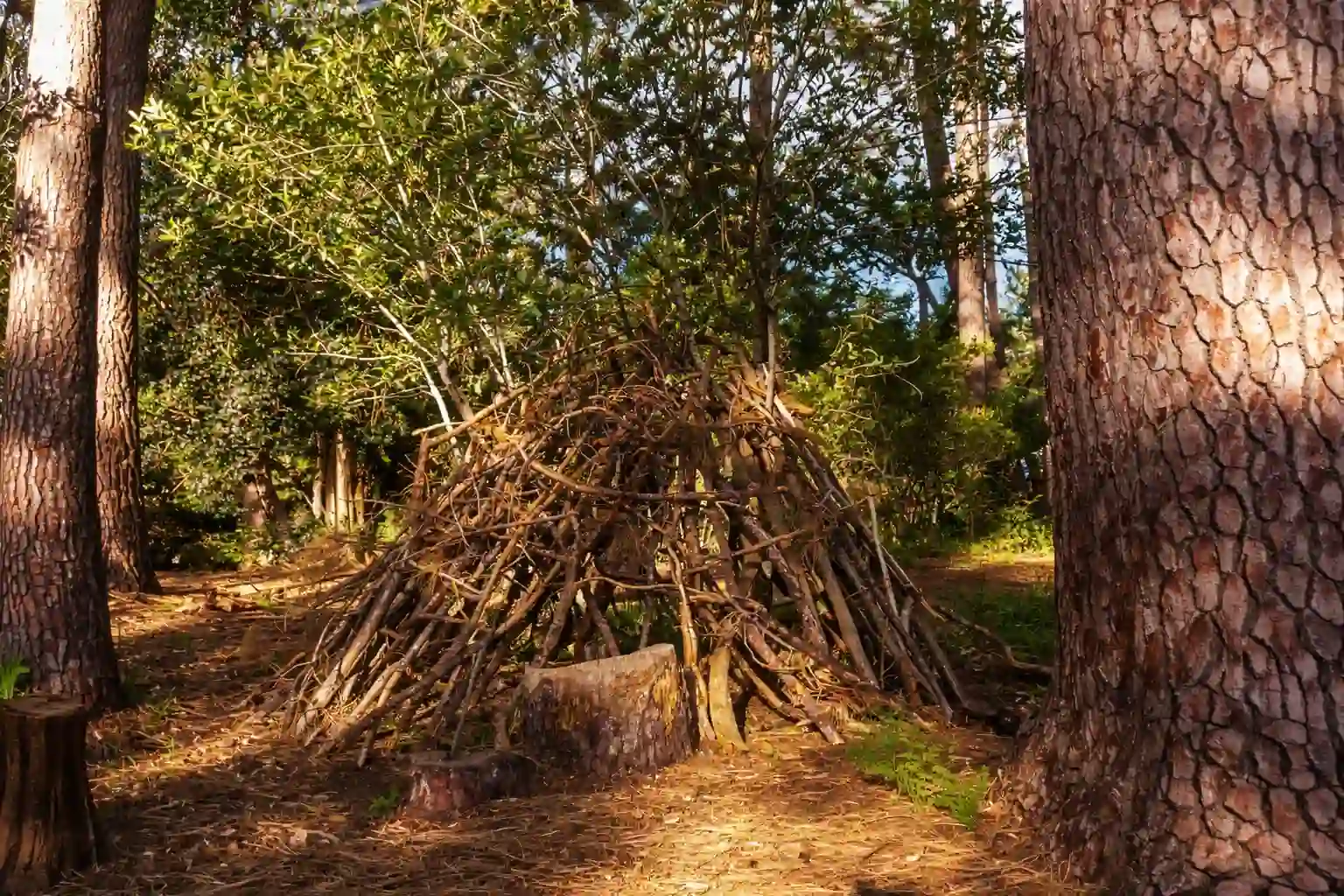
From real survival practice, the debris hut stands out as one of the most common shelters because it uses what is already on the forest floor. You gather branches, leaves, pine needles, grass, and bark to create an insulated cocoon that traps body heat. Start with a long, sturdy branch as the ridgepole, then prop one end against a rock, stump, or forked stick. This simple setup has helped me stay warm during unexpected weather when speed mattered more than comfort, and it’s a practical example of how to build a shelter using natural materials.
Next, lean smaller branches on both sides to form a strong frame, then cover it with thick layers of natural debris. When you crawl feet-first inside, leave just enough space to stay warm without letting heat escape. This design is great for cold nights, strong wind, and reliable protection, especially when you need to build a shelter using natural materials quickly without tools or modern gear.
Lean-To Shelter: How to Build a Shelter Using Natural Materials for Speed and Smart Coverage
From years of outdoor practice, I’ve learned that a lean-to shelter is one of the most simple yet effective options when you need fast shade or light rain protection. You usually find a fallen tree, or place a long branch against a log or rock to act as a ridgepole. Then you lean branches at an angle, which creates instant coverage without effort. This setup works especially well during quick daytime use, when time and energy matter more than comfort, and it’s a practical way to build a shelter using natural materials.
To improve performance, layer the top with brush, leaves, bark, or grasses so water runs off instead of dripping inside. I always add more insulation to the back if wind becomes a concern, because that’s where heat loss happens first. This type of shelter is great for sudden rain, short stops, and staying dry while moving through changing weather, proving that you can build a shelter using natural materials for reliable protection without tools or effort.
Rock Overhang or Cave Shelter: How to Build a Shelter Using Natural Materials
In harsh landscapes, a rock overhang or cave shelter can be a lifesaver, especially when you find a natural ledge, boulder stack, or shallow hollow already shaped by time. From my field experience, these formations use the land itself as a windbreak and roof, saving energy and time. Always check for animal signs before entering, because safety comes first. Once cleared, you can build a shelter using natural materials like a debris wall on the open side to improve insulation and control airflow.
If conditions worsen, use branches or logs as a temporary door when needed, which helps trap warmth and block drafts. This shelter type is great for windy high-altitude areas with exposed terrain, where building a shelter using natural materials from scratch is difficult. With smart adjustments, natural stone structures offer strong protection and reliable comfort using nothing more than awareness and respect for the landscape.
Where to Build Your Shelter Using Natural Materia
Choosing the Right Ground and Direction to Build a Shelter Using Natural Materials
From real field experience, the first rule is to pick your location carefully. Always look for high ground to avoid flooding, even if the weather looks calm. I usually choose areas near natural windbreaks like boulders or trees, which reduce exposure without extra work. Just as important is what to avoid—never set up in dry creek beds or low spots that can fill with water fast after rain. These small decisions make a big difference in long-term safety and help you effectively build a shelter using natural materials..
Timing, Warmth, and Daily Comfort When You Build a Shelter Using Natural Materials
Once the ground is safe, face the entrance away from the wind to keep cold air out. I also consider the time of day before settling in. Shaded spots are great for daytime rest, while sun-facing areas help you stay warmer overnight. This balance between shade and warmth comes from practice, and it’s one of those lessons you only learn by paying attention to the land, which helps you build a shelter using natural materials effectively.








Leave a Reply